
Consider a piece of equipment built in Europe, then eventually sold and shipped to a contractor in the U.S. When that contractor goes to replace the hydraulic quick coupler or add an attachment, they run into compatibility issues because the machine was built around the European style, while most of the couplers on the shelf here follow the U.S. standard.
Situations like this were once incredibly common.
As equipment moved across borders and manufacturers developed their own regional coupling styles, farmers, operators, and distributors were left dealing with constant mismatches. No one knew what would connect to what because there was no shared standard to match couplers across equipment.
To solve this, manufacturers formed committees, aligned their designs, and created two general-purpose hydraulic quick coupler styles, defined under ISO 7241-1: ISO-A and ISO-B.
It became the hydraulic equivalent of metric vs. imperial—two systems that grew up on different sides of the world, each widely used in its own region, and neither inherently better than the other. Just different.
Customers often don’t know which coupling type they need, especially when managing equipment from multiple brands and regions. Recommending the correct hydraulic coupler helps prevent cross-contamination, leaks, and costly downtime.
That’s why it’s important to know the differences and how to help your customers choose the right one.
When you boil it down, the differences between ISO-A and ISO-B are less about performance and more about where the equipment was built and what it was originally designed to connect to.
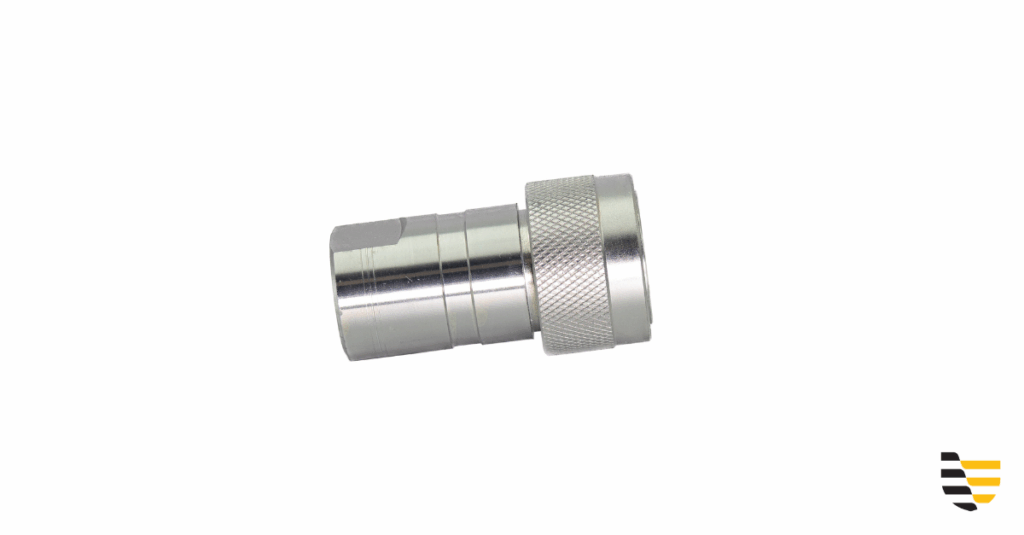
It’s common on equipment manufactured overseas and frequently found on imported machinery or attachments that originated in European markets.
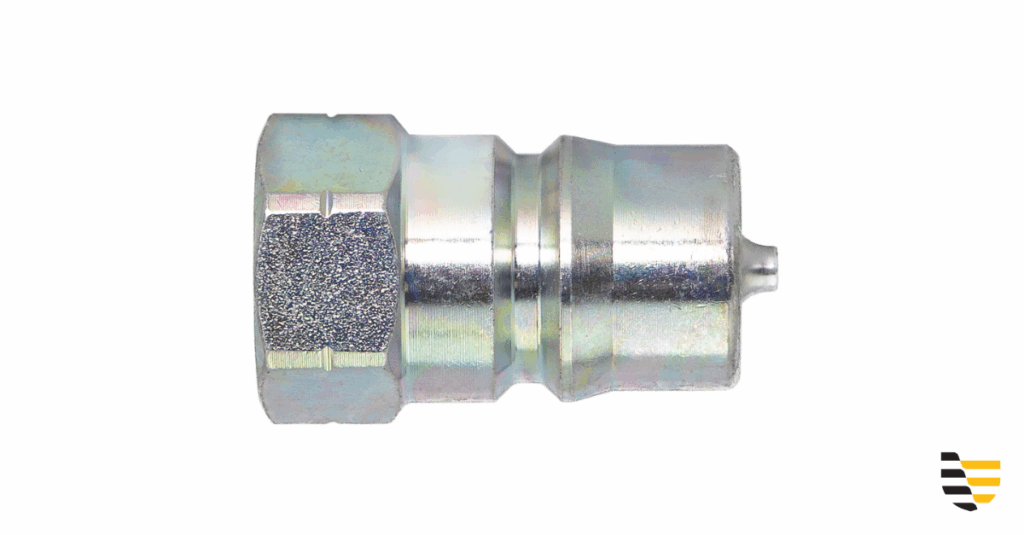
It’s standard on most American-made equipment and the style U.S. operators and distributors are most familiar with.
These regional origins are the main reason customers still encounter mismatches today. When a machine or attachment comes from Europe, it likely uses ISO-A, but when it’s built in the U.S., it’s almost always ISO-B.
And because the two styles do not interchange, matching the coupler to the equipment’s origin is the first step in steering a customer to the right product. At PCI, we stock both types—our ANV Series (ISO-A) and HNV Series (ISO-B)—so distributors can support domestic and imported equipment alike.
This single difference drives most of the confusion customers run into. Even though the couplers look similar and serve the same purpose, the two styles are not interchangeable, which is why identifying the equipment’s origin matters so much.
Functionally, however, both styles are used in the same types of applications. ISO-A and ISO-B are considered general-purpose hydraulic quick couplers, and you’ll find them across:
From a performance standpoint, there’s no meaningful advantage of one style over the other. Both use a poppet-seal design, both can hold pressure, and both meet the needs of everyday hydraulic applications.

First, make sure a quick coupler is the right fit for the application. Once you’ve confirmed that a hydraulic quick coupler is appropriate, the next step is selecting the right one. Whether it’s ISO-A or ISO-B, you need to make sure the coupler meets the basic requirements of their system.
You can do so using the STAMP method:
What flow rate and port size does the system require? Use this information to choose the correct body size and ensure the coupler won’t restrict flow or create unnecessary pressure drop.
What temperature range will the coupler be exposed to? Select a coupler with seal materials and construction suited for the minimum and maximum temperatures.
How will the coupler be used? What motions, forces, vibration, or environmental conditions matter? Match the coupler’s design and materials to the demands of the equipment (static vs dynamic systems, heavy vibration, outdoor exposure, chemical wash-downs, etc.).
What fluid or material passes through? Are there aggressive additives? Is the environment corrosive? Ensure the body material and seal compounds will work well within the operating environment.
What is the working pressure, peak pressure or spikes, and residual pressure when disconnected? Choose a coupler that exceeds the worst-case.
Once you’ve worked through STAMP, you’ll have all the information you need to ensure the hydraulic quick coupler will perform safely in your customer’s system.
You may also see an expanded version of this checklist called STAMPED that includes two additional considerations:
The additions can be helpful situational checks when thread compatibility or lead time could affect the customer.
Choosing the right hydraulic quick coupler doesn’t have to be complicated. Once you’ve confirmed that a quick coupler is the right fit for the application, all that’s left is identifying whether the equipment uses ISO-A or ISO-B and determining which coupler meets the system’s requirements.
At PCI Hydraulics+, we stock both ANV (ISO-A) and HNV (ISO-B) couplers—each meeting or exceeding ISO 7241-1 standards—so you always have a reliable option ready for your customers. And because we’re built to be the distributor’s distributor, you get fast, friendly support and the inventory depth to keep your customers running without delay.
If you need a partner that makes hydraulic sourcing easier, we’re here to help. You can browse our catalog or request a quote to get started.
