
Selling into the agriculture market means understanding the hydraulic standard that keeps farmers from losing time and productivity: ISO-5675.
When couplers don’t connect properly or begin to leak, farmers lose daylight. During planting and harvest, that kind of downtime can be a disaster.
ISO-5675 exists to prevent those failures. It gives farmers a dedicated standard so their tractor hydraulics and implements can work together, even across different manufacturers.
For distributors, that makes ISO-5675 couplers non-negotiable. If you don’t know how the standard works—or which type your customer needs—you risk sending them home with a coupler that won’t perform in the field.
Below, you’ll learn why this standard is essential for the farmers you serve, and how to guide them toward the coupler type that best fits their equipment and working conditions.

Agriculture puts unique demands on hydraulic couplers. Implements—the tools that do the harvesting, cutting, tilling, baling, and other crop-related work—are swapped constantly, equipment from multiple manufacturers has to work together, and repairs often happen right in the field.
These unique needs are the reason the industry relies on ISO-5675 agriculture couplers; they help solve the core challenges farmers face every day.
Harvesting, tilling, cutting, baling, each task requires a different implement, and farmers may swap them frequently throughout the day. ISO-5675 couplers are designed to make these changes fast and reliable, so operators don’t lose valuable field time during critical planting and harvest windows.
A farmer might run a John Deere tractor with a New Holland baler and a Case IH mower. Without a dedicated agricultural standard, each OEM could have adopted a different coupler type, forcing farmers into mismatched connections and constant frustration.
SO-5675 couplers give the entire ag market a common interchange, reducing downtime, returns, and compatibility issues for your customers.
Farmers can’t afford delays in the field, especially during planting and harvest. The simplicity and fast connection of the ISO-5675 ball-style male make it a practical choice for quick equipment changes.
Frequent connect-disconnect cycles and shifting hydraulic loads are part of everyday farm work, and couplers need to perform reliably. ISO-5675 addresses this with two male designs:
Let’s take a closer look at how each style works in the field.
Knowing the differences between the two male styles in ISO-5675 will help you guide customers to the connection that best suits their equipment and the conditions they’re working in.
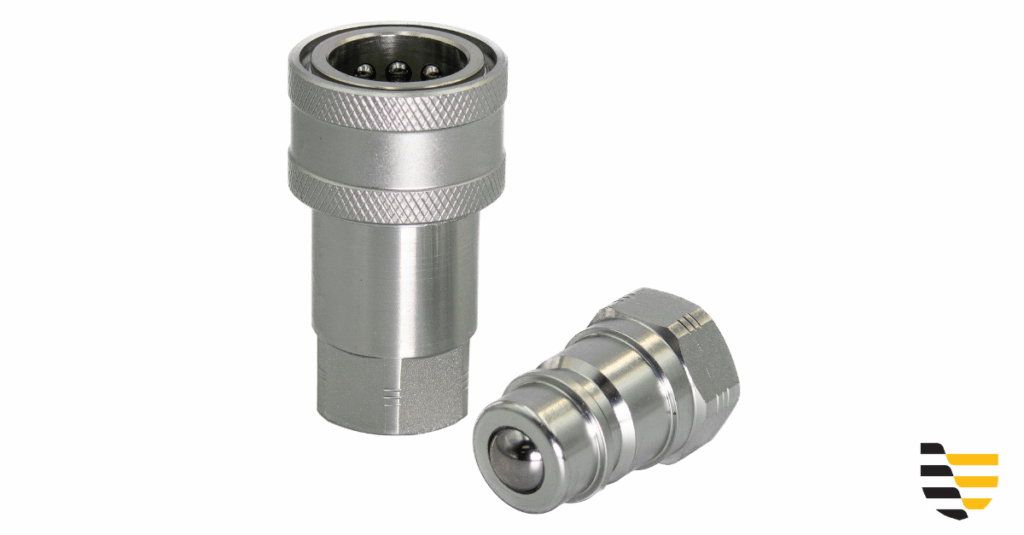
The ball-style design is the traditional agricultural style, using a metal ball and cone. Ball-style couplers are known for their easy, one-handed connection and disconnection, making them useful in systems where operators switch attachments often and need fast, low-effort hookups.
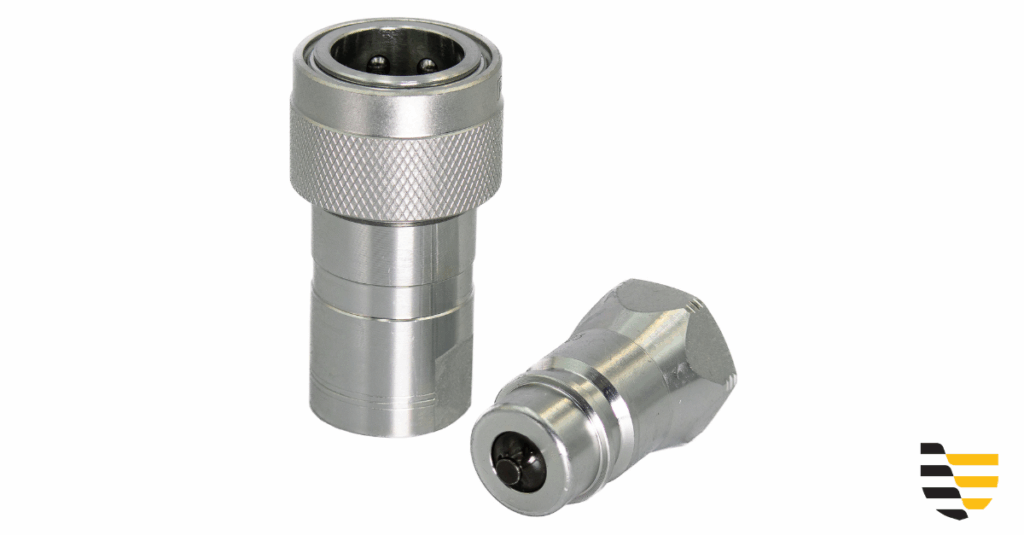
The poppet-style male was introduced later as materials and sealing technology improved. Instead of a metal-to-metal seat, it uses a spring-loaded poppet valve with an elastomeric seal, similar to an O-ring. This design performs better under vibration and pressure changes, offering a tighter, more controlled seal than a ball-style connection.
Poppet-style couplers also naturally limit fluid loss during disconnection and provide better protection against contamination.
They represent the two mature designs that evolved from decades of field use: ball-style for ease of connection and poppet-style for improved sealing and performance under vibration.
For distributors, stocking both styles ensures you can support the full range of equipment and preferences found in agricultural fleets.
By understanding the intent behind the ISO-5675 standard and the differences between its ball-style and poppet-style male designs, you can better guide customers toward couplers that reduce downtime and perform reliably in the field.
At PCI Hydraulics+, we support both styles through the NS and NV Series, giving distributors complete coverage for their customers’ equipment. We’re “built to be the distributor’s distributor.” That means fast, reliable service, globally-sourced products, and support you can depend on.
Ready to streamline your agricultural coupler inventory and better support your customer base? Request a quote today.
